



Sprint Work Order
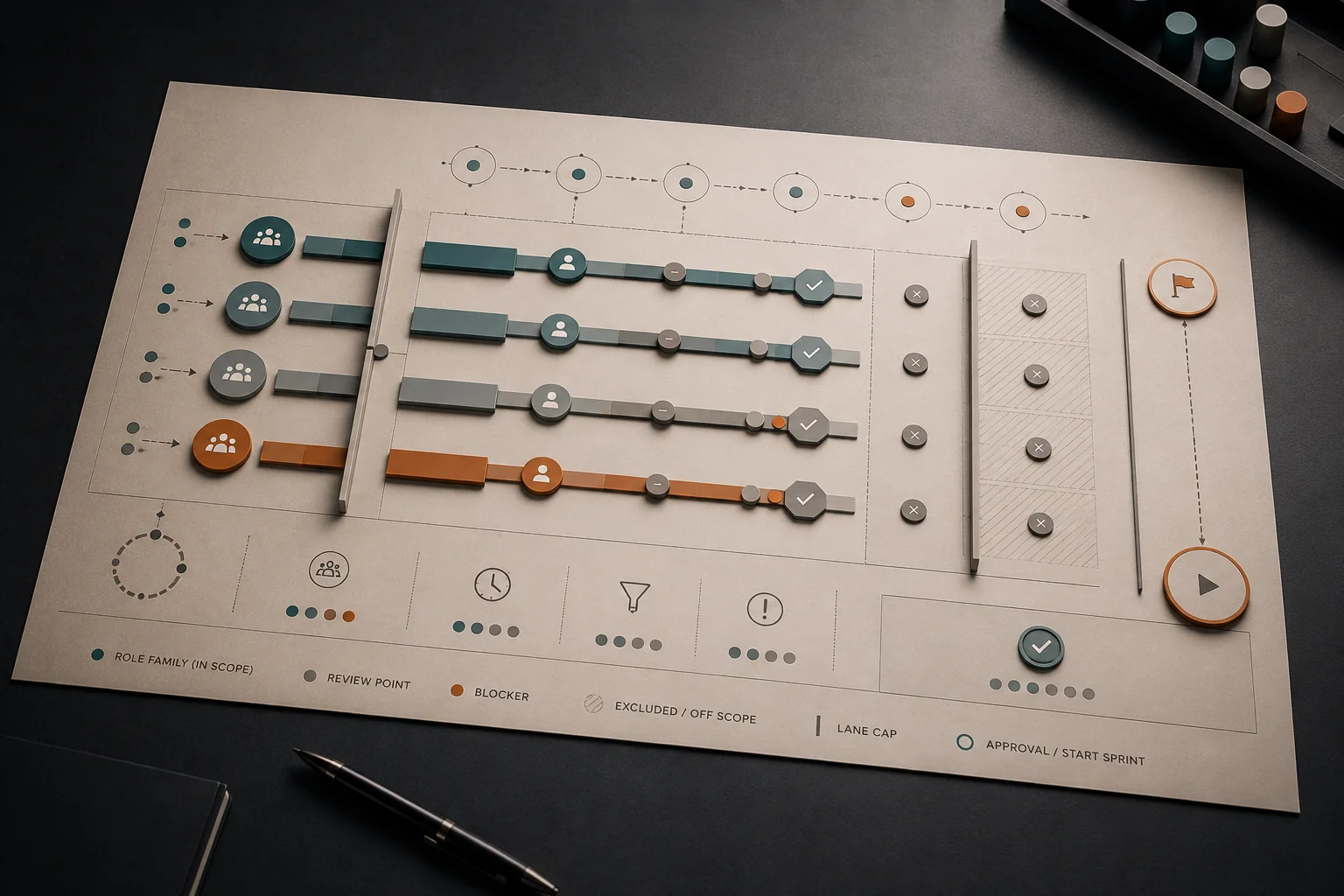
Agreed roles, rhythm, priorities and what is out of scope for this sprint.
Several roles or hiring waves need to move together — Momentum runs them in a capped sprint with lane limits, fixed reviews and accountable status. Not more recruiters dropped in: a controlled cadence where priorities, blockers and decisions are recorded every cycle. For recurring demand when one Hire lane cannot carry the load.

03
Sprint cadence
Typical focus
Two or more role families or repeated hiring waves
What you receive
Sprint work order, lane plan, status taxonomy, tracker, review notes, blocker log, learning log and acceptance summary
What it is not
Unlimited support or deep one-off search outside the lane plan
Typical timeline
6–12 weeks per sprint cycle
Momentum keeps several approved roles moving in a clear rhythm — with lane limits, regular reviews and visible status.
The right entry depends on what is blocking you — not the label on the proposal.

You sign off on sprint outputs and the next priorities — or list defects within five business days.

Bring your role families, review owner and tracking system — we will tell you honestly if sprint cadence is the right mode.
A short conversation about rhythm and capacity — not open-ended support.
Done when: You sign off on sprint outputs and the next priorities — or list defects within five business days.
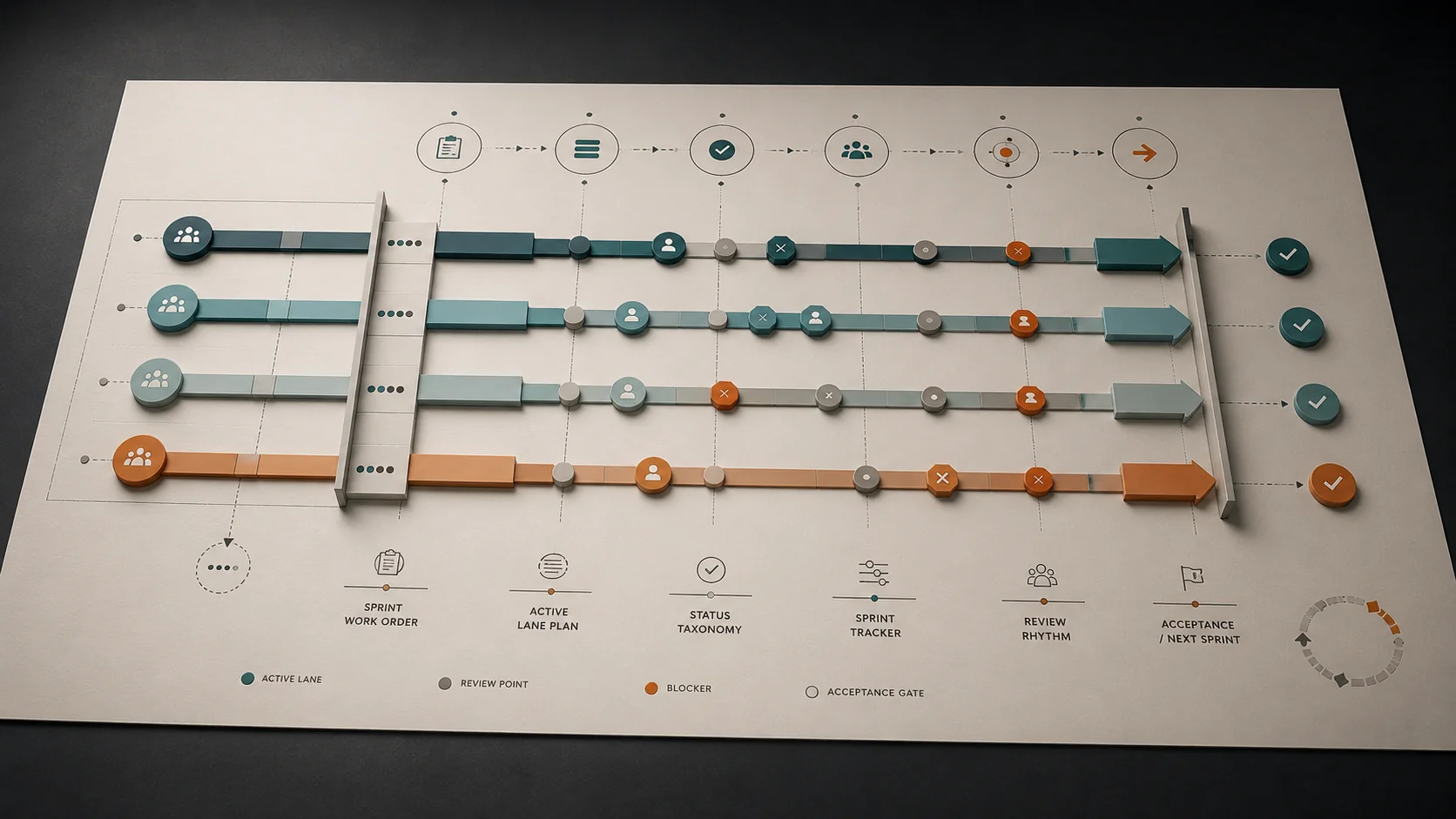
Agreed roles, rhythm, priorities and what is out of scope for this sprint.

Which roles are active, who owns them and what progress looks like.
One language for progress across teams and tools.
Live view of status, blockers and decisions.
Written decisions from every sprint review.
Blockers with owners — not a list that sits untouched.
What worked, what did not, and what to prioritise next.
Sign-off on sprint outputs and whether to continue.
More about each item
The contract for one sprint — lane cap, review cadence and exclusions written before work begins.
Complete when: A sprint starts only when the work order is approved.
Every active lane has an owner and target status — nothing runs without agreement.
Complete when: Zero unapproved lanes — every active role is on the plan.
Shared definitions so reviews do not argue about what “in progress” means.
Complete when: Every core status has a written definition your teams share.
Tied to the system you already use — not a parallel shadow tracker.
Complete when: 100% of active lanes show owner and current status.
Every review ends with captured decisions — not verbal agreements that fade.
Complete when: Every review creates decision notes within the agreed cadence.
When something stalls, it is logged with an owner and escalation path.
Complete when: Every blocker has an owner; missed reviews trigger pause rules.
Sprint-level learning — not project history buried in inboxes.
Complete when: Learning is captured before the next sprint is scoped.
A clear end to the sprint — with defects listed or acceptance signed.
Complete when: Sprint acceptance signed within five business days.
Products define what we solve. Delivery defines how deeply Talentpark works inside your system.
How Momentum can show up at each depth:
Sprint design
About advisoryHiring sprint setup
About projectEmbedded Momentum
About embeddedTypical rhythm when delivered as a bounded project — advisory is shorter, embedded runs inside your live cadence.
We clarify demand, cadence, owners and blockers. One urgent role alone usually points to Hire.
We lock active lanes, rhythm, metrics, status taxonomy and exclusions. The sprint does not start before sign-off.
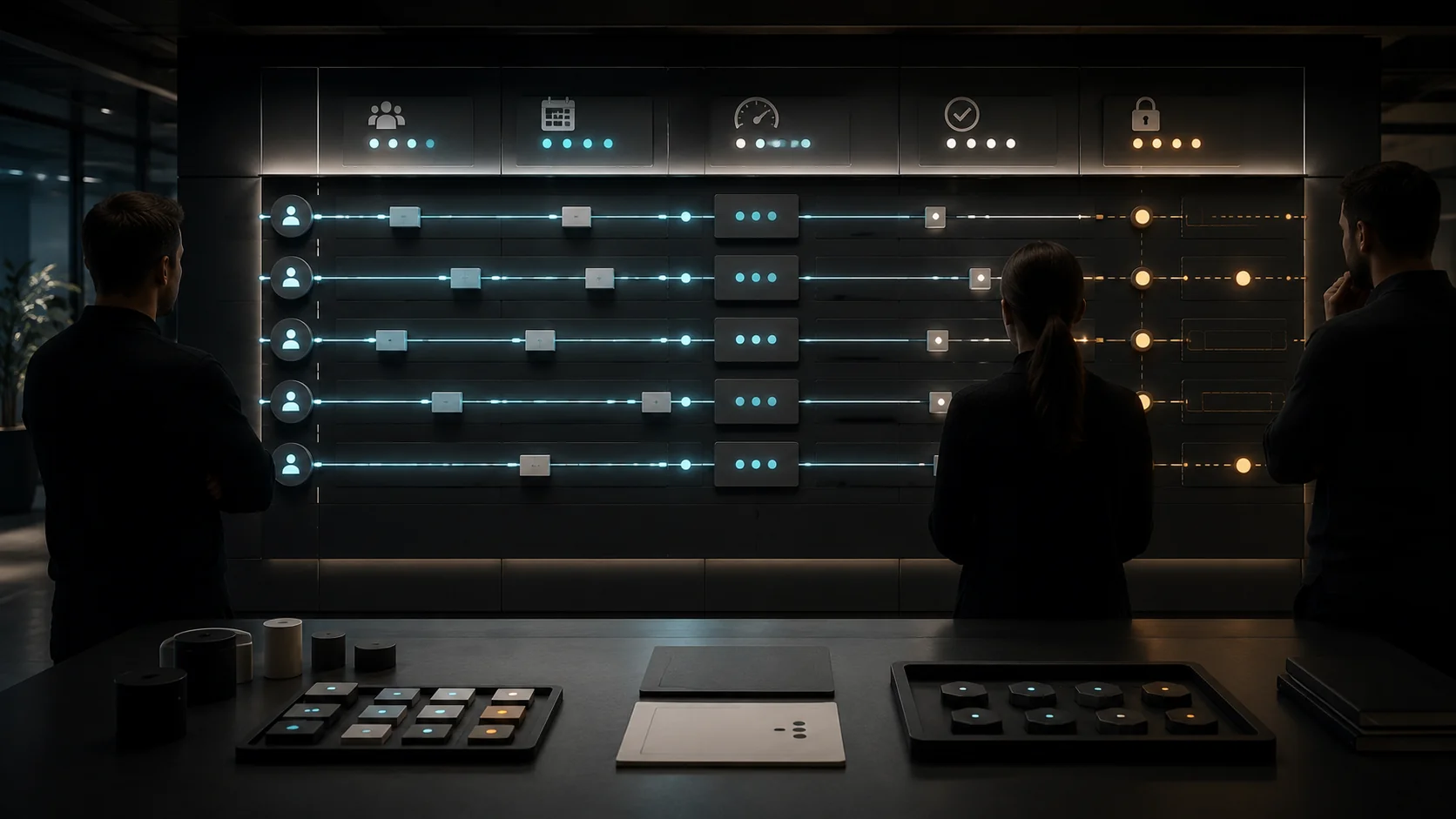
Lane plan, status model and capacity against the agreed cap.
Status, blockers, decisions and next actions — every review ends with written notes.

Outputs, learning and whether to continue the next sprint — or hand off to Hire, Command or Hyron.
Clear expectations from day one — including what we do not take on in this mode.

What a sprint includes, what it does not — and how lane limits protect quality.
No. Momentum is sprint-based with an active lane cap, review cadence and written acceptance. Unlimited support is not sold.
The sprint work order defines the active lane cap. Roles beyond the cap need an explicit capacity decision — not silent scope creep.
When only one role is open, the role thesis is unclear, or process ownership blocks reviews. Hire, Signal or Command may fit better.
Missed reviews trigger pause rules agreed in the work order. Cadence is part of the product — not optional overhead.
Each product targets a different hiring failure layer — compare fit before you choose scope or operating depth.