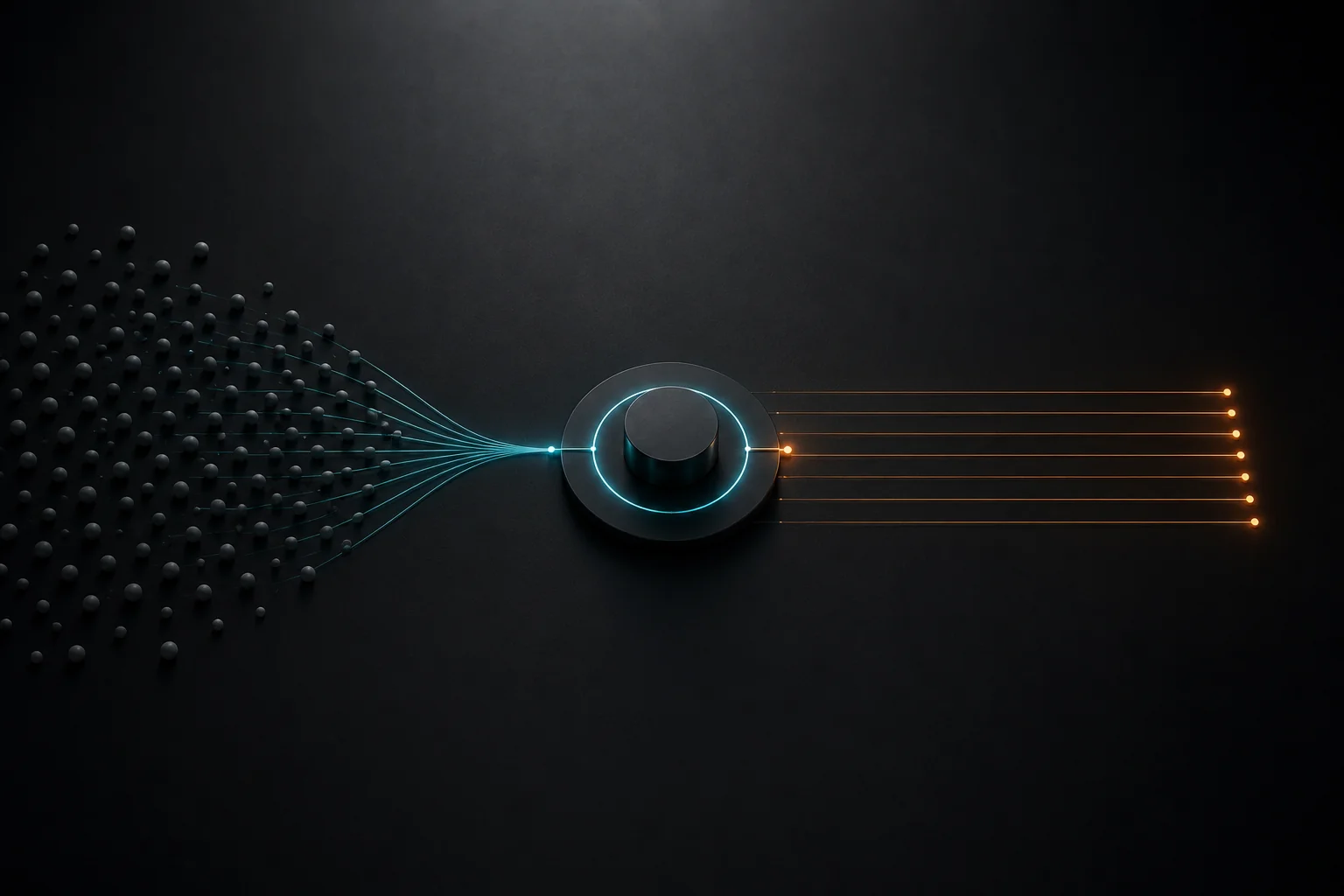




Assessment
Where the system fails and what layer is actually blocking progress.
Advisory turns uncertainty into a clear operating decision.
Before you scale sourcing, sprint capacity or embedded support, we diagnose which layer is actually failing — and whether your organisation is ready to commit. Advisory is for when the cost of the wrong move exceeds the cost of pausing to decide.
All servicesAll services
We diagnose the failing layer first. Then we recommend how closely Talentpark should work with you — never a package menu before fit is clear.
Operating depth
Light — diagnosis and decision clarity
Typical outputs
Assessment, decision brief, go / no-go recommendation
What it is not
Active execution or live operating inside your team
Typical timeline
1–2 weeks
You have a documented decision — go, no-go, adjust, or a scoped path to Project or Embedded.
You leave with an assessment, decision brief and operating recommendation — enough for leadership to commit budget and mandate without buying execution you are not ready to run.
Diagnose the failing product layer first — then decide how deeply Talentpark needs to work.
Product choice is separate — see Signal, Hire, Momentum, Command and Hyron.
You have a documented decision — go, no-go, adjust, or a scoped path to Project or Embedded.

Bring what is unclear — we will diagnose the failing layer and recommend depth honestly, without pushing execution.
A short conversation about clarity — not a generic services menu.
Examples — not separate products. The product layer stays Signal, Hire, Momentum, Command or Hyron.
Where the system fails and what layer is actually blocking progress.
The question, context and boundaries in one place.
Structured view of role thesis, market constraints or workflow gaps.
Which product and which delivery depth fit the diagnosed failure.
When the next step is bounded delivery — inputs, gates and acceptance sketched.
A reasoned recommendation with risks — not an open-ended exploration.

More about each output
We trace symptoms back to the failing layer — unclear market thesis, blocked role lane, missing sprint rhythm, broken governance or uncontrolled AI workflow. The assessment separates what is confirmed from what is assumed, and names who must own the next decision.
Complete when: Leadership agrees on the diagnosed layer and the main blocker — not a commercial label.
A single document that frames the decision question, business context, boundaries and what must be true before any deeper engagement. Written for the people who must approve budget, scope and operating depth.
Complete when: Sponsors can agree on the next move without commissioning execution.
When the blocker is clarity on role, market segment or workflow, we structure the thesis, evidence gaps and adjustment paths. This is diagnosis — not sourcing volume, interviews or pipeline activity.
Complete when: The team knows whether to proceed, adjust the thesis or stop.
Based on the diagnosed layer, we recommend which product fits and which delivery depth — Advisory, Project or Embedded — matches your risk and operating need. Advisory does not rename products to match procurement categories.
Complete when: You understand product, depth and why — including when the answer is to stop.
If the next step is bounded delivery rather than more diagnosis, we outline inputs, gates, deliverables and acceptance criteria for a Project engagement. This is a bridge document — not a binding SOW.
Complete when: You can decide whether to open a scoped Project — or stay at Advisory depth.
A written recommendation with named risks — go, no-go, or adjust before Talentpark scales depth. Advisory ends with a decision, not an open exploration or retainer by another name.
Complete when: You accept the recommendation or agree on a documented adjustment before deeper work starts.
The product defines what we solve. This table shows how each product can appear at this operating depth — without changing product identity.
Market and role decision
About SignalApproved profile — matching candidate search
About HireSprint design
About MomentumOperating model review
About CommandAI workflow assessment
About HyronDelivery modes explain operating depth — not a menu of packages to pick before diagnosis.

What Advisory is for, what it is not — and how it differs from Project and Embedded.
No. Advisory is how lightly Talentpark works before execution starts. The product — Signal, Hire, Momentum, Command or Hyron — defines which problem layer is failing. Advisory defines whether you need clarity, a bounded package or live operating support next.
When the main risk is committing to the wrong move — unclear role, market, workflow or operating model. When starting execution now would create rework, wasted sourcing or hiring the wrong profile.
A named next step — not an open exploration. Often that is Project for a bounded result, or Embedded when live operating support is required inside your rhythm. Sometimes the honest answer is stop: not every situation needs deeper engagement.
Yes — when sponsor, owner, scope, inputs and acceptance criteria are already clear. Advisory is for decision clarity, not a mandatory gate before every engagement.
Each mode defines how closely Talentpark works with you — chosen for fit once the product layer is clear.


You've seen how this depth works. Compare Signal, Hire, Momentum, Command and Hyron — each addresses a different layer of the hiring system.